Dentalist Sdn Bhd – Dental Clinic Kuala Lumpur North Kiara

- Implant

 Implant
The tooth is plants within the missing site's bone.
 Dental Bridge
Fill the space by trimming both neighboring teeth and combine three teeth into a single mass.
 Denture
Creating uniform teeth and dentition by taking a gum impression
 All-on-4
A cutting-edge dental implant method that uses just four implants to replace every tooth in your upper or lower jaw.
- Veneer

 Porcelain Veneers
Dental Veneers made with Ceramic.
Composite VeneersDental Veneers made with Resin.
- Braces


- Implant
- Implant
The tooth is plants within the missing site's bone.
Dental BridgeFill the space by trimming both neighboring teeth and combine three teeth into a single mass.
DentureCreating uniform teeth and dentition by taking a gum impression
All-on-4A cutting-edge dental implant method that uses just four implants to replace every tooth in your upper or lower jaw.
- Veneer
- Porcelain Veneers
Dental Veneers made with Ceramic.
Composite VeneersDental Veneers made with Resin.
- Braces

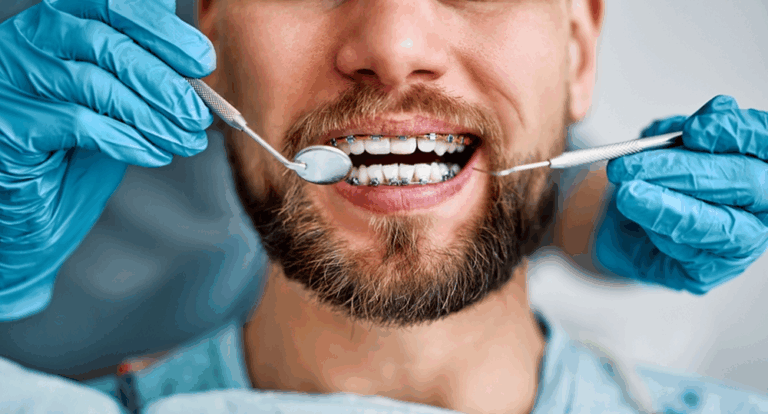
Choosing between Invisalign and traditional braces is not just about how your teeth will look during treatment. It is also about how orthodontic treatment fits into your everyday life. Your work, eating habits, social commitments, oral hygiene routine and willingness to follow treatment instructions can all influence which option suits you best.
If you are considering Invisalign in Kuala Lumpur or comparing clear aligners vs braces, you may be wondering whether removable aligners are more convenient, whether braces can correct more complicated dental problems, and how each option affects daily activities.
The answer is that neither treatment is automatically better for everyone. Invisalign and traditional braces can both straighten teeth, but they work differently and have different advantages, limitations and responsibilities.
At Dentalist in North Kiara, Kuala Lumpur, patients can explore clear aligner treatment and different orthodontic options. This guide explains how Invisalign compares with traditional braces, helping you prepare for an informed conversation with your dentist.
Invisalign vs Braces: What Is the Main Difference?
Invisalign is a clear aligner system that uses removable, transparent trays to move teeth gradually. Traditional braces use brackets and wires attached to the teeth to guide tooth movement. Both are orthodontic treatments, but they differ in appearance, maintenance, eating habits and the level of responsibility required from the patient.
Here is a quick comparison.
| Feature | Invisalign clear aligners | Traditional braces |
|---|---|---|
| Appearance | Transparent trays that are generally less noticeable | Metal brackets and wires are visible |
| Removable | Yes, for eating, drinking most beverages and cleaning | No, fixed to the teeth during treatment |
| Eating | Remove aligners before meals | Avoid certain hard, sticky and chewy foods |
| Oral hygiene | Brush and floss without trays in place | Clean carefully around brackets and wires |
| Daily commitment | Requires consistent wear, usually around 20–22 hours daily as prescribed | Works continuously because the appliance is fixed |
| Suitable cases | Selected mild to complex cases, depending on the treatment plan | Can treat a wide range of alignment and bite problems |
| Appointments | Periodic reviews to monitor progress | Periodic adjustments and progress reviews |
| Best lifestyle fit | People who can follow a consistent wear and cleaning routine | People who prefer an appliance that does not depend on remembering to wear it |
These are general differences. The appropriate option depends on your teeth, bite, oral health and the orthodontic plan recommended for you.

1. Invisalign vs Braces for Working Professionals in Kuala Lumpur
For many adults, the decision to straighten their teeth involves more than correcting alignment. They may have meetings, client presentations, professional events and busy work schedules.
If you regularly meet clients or speak in front of groups, the appearance of your orthodontic appliance may be an important consideration.
Why working adults consider Invisalign
Invisalign clear aligners are designed to fit closely over the teeth. Because the trays are transparent, they are generally less noticeable than conventional metal braces.
This may appeal to professionals who prefer a discreet orthodontic option during meetings, presentations or everyday conversations.
The trays are also removable, which can be convenient when eating during a work lunch or cleaning your teeth after meals. However, removing them for long periods can interfere with your prescribed wear schedule.
What should professionals consider before choosing braces?
Traditional braces remain a practical option for many adults. They do not need to be removed and reinserted throughout the day, so you do not have to remember to wear them after meals.
However, the brackets and wires are more visible, and food can become trapped around the appliance. You will need to plan time for careful brushing and cleaning.
Which option fits a professional lifestyle?
If discretion is your main priority and you can consistently wear removable aligners, Invisalign may suit your preferences.
If you would rather have a fixed appliance that works continuously without daily removal decisions, braces may be a better practical fit.
Your dentist should still determine whether the treatment option you prefer can achieve the required tooth movements.
2. Clear Aligners vs Braces for Eating and Drinking
Your eating habits can make a noticeable difference to your orthodontic experience.
One of the most convenient features of clear aligners is that they can be removed for meals. Traditional braces, on the other hand, stay attached to your teeth, so you need to be more careful about certain foods.
Eating with Invisalign
With Invisalign, you generally remove your aligners before eating. This allows you to eat a wider range of foods without worrying about food directly damaging the trays during chewing.
After eating, clean your teeth before putting the aligners back in whenever possible. Food debris trapped under aligners can increase the risk of dental problems if oral hygiene is neglected.
You should also follow your dentist’s instructions about drinks. Water is generally the safest choice while wearing aligners. Hot, sugary or coloured drinks can cause problems such as distortion, staining or increased exposure of teeth to sugar, depending on the drink and circumstances.
Remember that every meal creates another opportunity to remove and reinsert the trays. If you snack frequently or have long lunches, you will need to manage your wear time carefully.
Eating with traditional braces
Braces do not need to be removed before eating, but some foods can damage the brackets or wires.
Your dentist may advise you to avoid or modify:
- Very hard foods, such as biting directly into hard nuts or ice.
- Sticky foods that cling to brackets.
- Chewy sweets that can pull on wires.
- Hard crusts or foods that require forceful biting.
- Biting directly into whole apples, carrots or similar firm foods instead of cutting them into smaller pieces.
You can still enjoy many everyday meals with braces. The key is choosing suitable foods, chewing carefully and following your orthodontic team’s instructions.
Which is better for people who enjoy eating out?
Clear aligners may offer more flexibility around meals because they are removed before eating. However, they require discipline after every meal.
Braces involve more dietary precautions but do not require you to remember to reinsert an appliance.
The lifestyle question is not simply which option lets you eat more foods. It is which routine you can maintain consistently throughout treatment.
3. Invisalign vs Braces for Oral Hygiene
Keeping your teeth and gums healthy is essential during orthodontic treatment. Moving teeth does not remove the need for regular brushing, flossing and dental check-ups.
The type of appliance changes how you clean your teeth.
Is brushing easier with Invisalign?
In many cases, yes. Because Invisalign trays are removable, you can take them out to brush and floss your teeth normally.
A typical routine includes:
- Remove your aligners before meals.
- Brush your teeth with fluoride toothpaste.
- Clean between your teeth using floss or another recommended interdental aid.
- Clean the aligners according to your dentist’s instructions.
- Reinsert the trays as directed.
You should not assume that removable aligners eliminate the risk of tooth decay or gum disease. Poor cleaning, frequent sugary drinks and wearing trays over unclean teeth can still create problems.
How do you clean teeth with braces?
Brushing with traditional braces takes more care because food and plaque can collect around the brackets and beneath the wires.
You may need to use an orthodontic toothbrush, an interdental brush or other cleaning aids recommended by your dental team.
Pay particular attention to the areas above and below each bracket, the gumline and the spaces between teeth. If plaque remains around braces for long periods, it can contribute to gum inflammation, cavities and permanent white marks on the enamel.
Which treatment is better for people with busy routines?
Invisalign may be more convenient if you prefer to brush and floss without working around brackets. However, you must remember to clean your teeth and aligners consistently.
Braces require a more detailed cleaning routine, but the appliance remains in place, so you do not have to manage removable trays.
Neither option replaces professional dental reviews or good daily oral hygiene.
4. Invisalign vs Braces for Social Events, Weddings and Photographs
Some people begin considering orthodontic treatment before a wedding, graduation, important work event or other milestone.
If you are concerned about how your teeth will look in photographs, Invisalign may be appealing because its transparent trays are less noticeable than metal braces.
However, the choice should take into account your treatment goals and realistic timelines, not appearance alone.
Can Invisalign help if you have a wedding coming up?
Clear aligners may offer a discreet way to straighten teeth while you continue with your social plans.
But orthodontic treatment takes time. The duration depends on your starting alignment, bite, treatment complexity and how consistently you follow the prescribed plan.
It is not sensible to assume that Invisalign will finish before a particular event simply because the trays are removable or transparent.
If you have a fixed date in mind, tell your dentist at the initial consultation. They can explain what may be achievable and whether starting treatment before the event makes sense.
Can you attend events with traditional braces?
Yes. Many people attend weddings, meetings, parties and other events while wearing braces.
Metal braces are more visible, although ceramic braces may be less noticeable. If you choose fixed braces, ask your dentist about the available appliance options and their suitability for your case.
Should you choose treatment based on photographs?
Appearance is a valid preference, but it should not be your only consideration. Treatment suitability, oral health, bite correction, maintenance and long-term retention matter too.
Choose the treatment you can manage throughout the full treatment period rather than selecting an option only for a single occasion.
5. Is Invisalign More Comfortable Than Braces?
Comfort is one of the most common concerns for people considering orthodontic treatment.
Both Invisalign and traditional braces apply controlled forces to move teeth. As a result, some pressure, tenderness or discomfort is possible with either option, particularly when treatment begins or the appliance is adjusted.
What does Invisalign feel like?
When you start wearing a new set of aligners, you may feel pressure as the trays guide your teeth towards their planned positions.
The plastic edges may also feel unfamiliar at first. Most patients need a period of adjustment as they learn to speak and manage the trays comfortably.
Because aligners do not use the same brackets and wires as fixed braces, some people find them less irritating to the inside of their cheeks and lips. However, individual experiences vary.
What does wearing braces feel like?
When braces are fitted or adjusted, your teeth may feel tender for a few days. The brackets and wires can also irritate the cheeks or lips, particularly during the initial adjustment period.
Your orthodontic team can explain how to manage common discomfort and what to do if a wire or bracket causes a problem.
Which is less painful?
There is no universal answer. Invisalign may reduce some types of soft-tissue irritation, while both treatments can produce pressure or soreness as teeth move.
Severe, persistent or worsening pain should not be dismissed as a normal part of orthodontic treatment. Contact your dental team if you experience significant discomfort, swelling, a broken appliance or another unexpected problem.
6. Can Invisalign Fix Crowded Teeth and Bite Problems?
People often search online for questions such as:
- Can Invisalign fix crowded teeth?
- Can clear aligners close gaps between teeth?
- Are braces better for an overbite?
- Can Invisalign correct an underbite?
- Which treatment is better for complex orthodontic problems?
The answer depends on the severity and type of tooth movement required.
Clear aligners for crowded teeth
Clear aligners can correct many cases of dental crowding. They may also help close gaps and address selected bite problems.
Treatment planning is important because the aligners must apply appropriate forces in the correct sequence. Some cases require additional features, such as attachments or other orthodontic techniques, to achieve the desired movements.
More severe crowding or complex bite problems may require a different approach.
Braces for complex tooth movement
Traditional braces can provide detailed control over tooth movement and are commonly used for a wide range of orthodontic problems.
They may be recommended when the required movements are difficult to achieve predictably with removable aligners alone. Some patients may need additional orthodontic appliances as part of their treatment.
However, it would be inaccurate to say that braces are always better for complex cases or that Invisalign can correct every type of misalignment.
Which treatment is right for your teeth?
The right approach requires a clinical examination, assessment of your bite and appropriate records or imaging where indicated.
Your dentist or orthodontist should explain:
- The alignment and bite issues that need correction.
- Which treatment options are suitable.
- Whether additional appliances or procedures may be needed.
- The expected treatment stages and limitations.
- The importance of retention after treatment.
The best orthodontic treatment is the one that can address your specific needs safely and predictably.
7. Invisalign vs Braces for Teenagers and Adults
Age can influence orthodontic planning, but it does not automatically determine whether you need Invisalign or braces.
Both teenagers and adults may be candidates for orthodontic treatment. The appropriate option depends on dental development, the nature of the alignment problem, oral health and the patient’s ability to follow treatment instructions.
Are clear aligners suitable for teenagers?
Some teenagers can use clear aligners successfully, particularly when their permanent teeth have erupted sufficiently and they can follow the prescribed wear schedule.
The challenge is consistency. Aligners must generally be worn for around 20–22 hours per day when prescribed, and they need to be removed carefully for meals and cleaned before being reinserted.
If a teenager frequently forgets the trays, loses them or leaves them out for extended periods, treatment may not progress as planned.
Are braces better for teenagers?
Fixed braces may be a practical choice for teenagers who struggle with removable appliances or who need tooth movements better managed with a fixed system.
However, braces require careful cleaning and dietary precautions. Parents and teenagers should understand the responsibilities involved before choosing treatment.
Can adults straighten their teeth with Invisalign or braces?
Yes. Adults can receive orthodontic treatment when clinically suitable.
Some adults prefer Invisalign because the trays are less noticeable in professional and social settings. Others choose braces because they prefer a fixed appliance or because their treatment plan calls for it.
There is no single best option for every adult. Your dentist should consider your tooth alignment, gum health, existing dental work, bite and treatment goals.

8. How Long Does Invisalign Take Compared with Braces?
Treatment duration is an important factor when deciding between Invisalign and braces, especially if you have work commitments, travel plans or a particular event in mind.
However, there is no reliable single timeline that applies to everyone.
The duration depends on factors such as:
- The severity of crowding or spacing.
- The complexity of your bite.
- The amount and type of tooth movement required.
- Your response to treatment.
- Whether you follow the treatment instructions.
- Whether refinements or additional stages are needed.
How long does Invisalign take?
Some relatively simple aligner cases may take less time than more complex orthodontic cases. Your dentist will estimate the treatment duration after assessing your teeth and preparing a treatment plan.
Wearing aligners for the prescribed number of hours each day is essential. If you frequently leave them out, lose trays or move to the next set too early, treatment may be delayed.
How long do braces take?
Braces can also treat cases of different complexity, so the total duration varies. Your orthodontist will plan the adjustments and monitor how your teeth respond over time.
Neither Invisalign nor braces guarantees a faster result in every case.
What should you ask about treatment time?
Rather than choosing an appliance based on a general online estimate, ask your dentist for an individualised timeline.
Find out which stages are involved, how frequently appointments are needed, what could delay treatment and whether retainers are included in the overall plan.
A realistic treatment estimate is more useful than a promise of a quick smile transformation.
9. What Is Daily Life Like with Invisalign?
Invisalign offers flexibility, but that flexibility comes with responsibilities.
You need to wear the trays consistently, remove them for meals, keep them clean and store them safely when they are not in your mouth.
Travelling with clear aligners
If you travel regularly, plan ahead. Carry your current aligners, the next set if your dentist recommends it, a suitable storage case and the cleaning supplies you normally use.
Do not leave the trays wrapped in a napkin at a restaurant or place them loosely in a bag. They can easily be misplaced or damaged.
If a tray is lost or broken, contact your dental team for instructions rather than improvising a treatment change.
Drinking coffee and tea
You should generally remove aligners before drinking anything other than water unless your provider gives you different instructions.
Hot drinks may distort the plastic, while coloured or sugary drinks can stain the trays or leave sugars against the teeth.
If you enjoy frequent coffee breaks, consider how removing, cleaning and reinserting the trays will fit into your day.
Speaking with Invisalign
Some people notice a slight change in speech when they first begin wearing aligners. This often improves as they adapt, although experiences vary.
If your work involves presentations, telephone calls or frequent conversations, allow yourself time to become accustomed to the trays.
Is Invisalign convenient for frequent travellers?
It can be, provided you maintain the prescribed wear schedule and attend required reviews. Frequent travel may make appointments more complicated, so discuss your schedule with your dentist before starting.
10. What Is Daily Life Like with Traditional Braces?
Traditional braces remove the need to manage a removable appliance, but they create a different set of daily responsibilities.
Eating and cleaning
You will need to be mindful of foods that can damage brackets and wires. Brushing also takes longer because you must clean around the fixed appliance.
A consistent routine helps reduce plaque accumulation and supports gum health throughout treatment.
Sports and physical activities
If you play contact sports, tell your dentist or orthodontist before treatment. They can advise whether a suitable mouthguard is needed to protect your teeth and appliance.
If you experience a damaged bracket or wire, follow the instructions provided by your dental team and arrange an assessment when necessary.
Social and professional commitments
Braces may be more visible than clear aligners, but they do not prevent you from working, studying or participating in social activities.
Ceramic braces may be an alternative for people who want a less noticeable fixed appliance. Their suitability and maintenance requirements should be discussed with your dentist.
Is the fixed nature of braces an advantage?
For some patients, yes. You do not need to remember to put the appliance back in after meals or manage daily wear hours.
For others, the dietary restrictions and additional cleaning requirements make fixed braces less convenient.
Your personal habits are an important part of the decision.
11. Invisalign vs Braces: Which Is More Affordable in Kuala Lumpur?
Cost is a reasonable part of choosing orthodontic treatment, but the lowest starting price does not necessarily represent the best value for your case.
The final cost depends on the appliance, treatment complexity, required appointments, additional procedures and the terms of the treatment package.
When comparing Invisalign and braces in Kuala Lumpur, ask for a complete quotation rather than relying only on a headline figure.
Your quotation should explain:
- The appliance and treatment system being offered.
- What diagnostic records or scans are included.
- The expected number of appointments.
- Whether replacement aligners or refinements may involve extra charges.
- What happens if a bracket or wire needs repair.
- Whether retainers and post-treatment reviews are included.
- The payment schedule and any applicable conditions.
Dentalist’s existing service pages provide starting-price information for its orthodontic options. Since prices and package terms can change, check the clinic’s current pages and confirm the details directly before making a decision.
For treatment information, visit the Dentalist clear aligner service page or explore its orthodontic treatment options.
This blog focuses on comparing lifestyle suitability rather than repeating the service page’s price list. Once you understand which options may fit your needs, the service page can help you explore the next step.
12. What Happens After Invisalign or Braces Treatment?
Finishing active orthodontic treatment is an important milestone, but it is not the end of caring for your smile.
Teeth can move back towards their previous positions after braces or aligners are removed. This is why retention is an essential part of orthodontic treatment.
Why are retainers necessary?
Retainers help hold the teeth in their corrected positions while the surrounding tissues adapt. Your dentist will recommend a retainer type and wear schedule based on your treatment and individual needs.
Depending on your plan, retainers may be removable, fixed or a combination of both.
Is the retainer routine the same for everyone?
No. Your dentist will explain how often to wear your retainers, how to clean them and what to do if they become damaged or stop fitting properly.
Do not stop wearing your retainer simply because your teeth look straight. Follow your provider’s instructions to help maintain the result.
Can teeth move after treatment?
Yes. Some movement can occur over time, particularly if retainers are not worn as prescribed. Regular reviews and consistent retention help manage this risk.
Before starting orthodontic treatment, ask about the retention phase and any associated costs. Understanding the full journey helps you plan for the long term.
13. Questions to Ask Before Choosing Invisalign or Braces
Before you commit to treatment, make sure you understand your options and responsibilities.
Consider asking your dentist or orthodontist these questions:
- What alignment or bite problems need to be corrected?
- Are both Invisalign and traditional braces suitable for my case?
- What are the advantages and limitations of each option for my teeth?
- How long might treatment take, and what could cause delays?
- How often will I need appointments?
- What daily cleaning and maintenance will be required?
- Will I need attachments, elastics or other appliances?
- What is included in the full treatment cost?
- What are the risks if I do not follow the prescribed routine?
- What retainers will I need after treatment, and for how long?
These questions can help you make a decision based on clinical needs, lifestyle and realistic expectations rather than appearance alone.